September 2026
State of Hospitality Staffing Reliability
Operators lose coverage on the night that matters: a banquet turn, a gala, a stadium event. This September 2026 study reports how many booked workers showed up and how often the same workers came back in Croux's Alabama and Northeast Wisconsin markets, and how much requested work got covered in Alabama, with the definition behind each number. It also collects published results from named hotels, caterers, event companies, and venues.
Hotel, catering, and venue operators already on Croux




85%
Alabama slots worked
91%
Alabama booked workers showed
92%
NE WI booked workers showed
8 in 10
Alabama shifts, repeat worker
What this edition measures
This first edition covers hotel, banquet, catering, event, and venue work. It reports the numbers that decide whether a sold date still has a floor team: fill rate, show-up rate, and how often the same workers come back.
Market figures. Croux measured these on its own platform in two regions over the 12 months to September 2026:
- Alabama (Birmingham, Montgomery, Tuscaloosa, Auburn, Huntsville, Mobile, Florence): 19,000+ shifts and 131,000+ hours worked by 1,200+ active workers. 85% of requested worker slots on shifts the business did not cancel were worked. 91% of workers still booked inside the final 24 hours clocked in. 8 in 10 shifts were worked by someone who had already worked for that same business. For shifts posted less than 48 hours ahead, the first worker was confirmed in a median of 22 minutes.
- Northeast Wisconsin (Green Bay area, Fox Cities, and the Oshkosh market): 3,100+ shifts and 20,000+ hours worked by 200+ active workers. 92% of workers still booked inside the final 24 hours clocked in. 8 in 10 shifts were worked by a returning worker. For shifts posted less than 48 hours ahead, the median to the first confirmed worker was 42 minutes. This edition does not include a Northeast Wisconsin fill rate.
This edition does not include a marketplace-wide or national average, and these figures describe these two regions only. Businesses set the wage and pay Croux a transparent fee, with no agency markup on the rate.
Named account results. Published Croux case studies report fill, no-show, and repeat-worker rates for named hotels, clubs, caterers, and venues. Those are account records, not marketplace averages. Each one follows a single account over its own window, so you can see what reliability looks like on a real calendar.
Ask any provider for these. If they cannot produce them, they are selling a list.
The four numbers that matter
Fill rate
Worked slots divided by requested slots on shifts the business did not cancel. Alabama: 85%, 12 months to September 2026.
Show-up rate
Workers still booked in the final 24 hours who clocked in. Alabama 91%, NE Wisconsin 92%. No pay for a no-show.
Repeat-worker rate
Share of worked shifts by someone who already worked for that business. 8 in 10 in Alabama and NE Wisconsin.
Time to first worker
Median from posting to first confirmed worker, shifts posted under 48 hours ahead. Alabama: 22 minutes.
Reliability is not a volume problem
You know the pattern: request ten people and hope five arrive. Agencies treat staffing as a numbers game. Hotel banquet leads, catering captains, and venue operators cannot. One empty station wrecks paced service, and the planner still blames the house. Croux treats staffing as a prediction problem. Every worker is identity-verified and background-checked, and businesses can rate each worker after a shift. A Trust Score ranks who is likely to show, finish, and return. Favorite the people who already know the room.

Published hotel and club results
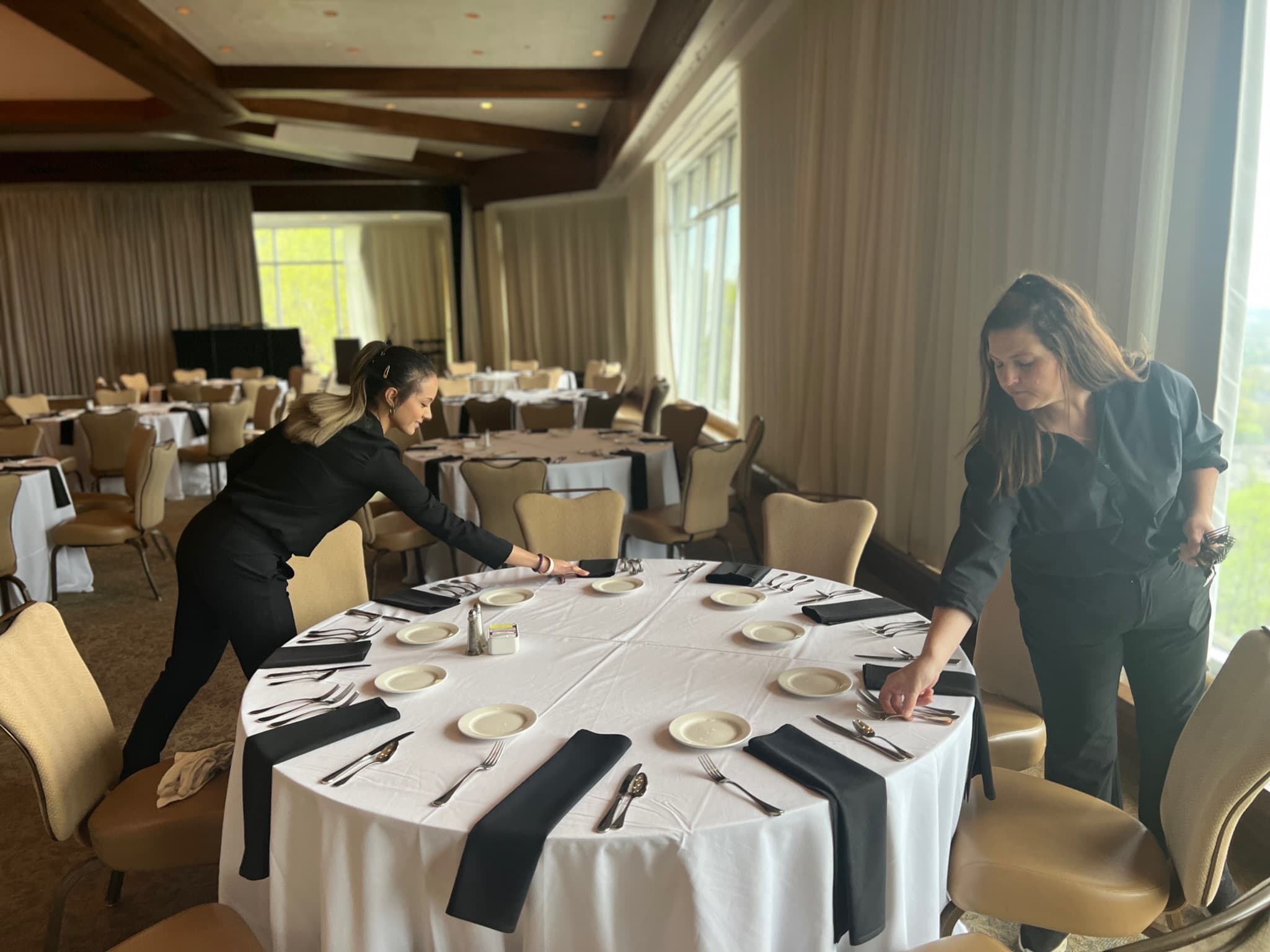
Renaissance Montgomery ran 657 shifts at 94% fill, 2% no-shows, and 92% repeat. PCH Hotels & Resorts ran 1,326 shifts across five hotels at 90% fill, 3% no-shows, and 90% repeat, with 491 workers. The Club in Birmingham holds a 97% fill rate across nearly 8,900 completed assignments. Greystone holds 92% fill and 84% repeat over 1,588 shifts. Hyatt Regency Green Bay cut no-shows to 1% in the trailing 12 months.
Published catering, event, and venue results
SFM Catering at Birmingham's Harbert Center ran 919 shifts over 44 months at 89% fill and 4% no-shows, with 398 workers. The Fennec ran 744 shifts at 91% fill and 2% no-shows. Elevation recorded 470 completed assignments and 88% fill after launch, with a 96% show-up rate on hired shifts. PMI Entertainment Group built a 300-worker pool with an 83% repeat-worker rate. Bruno Hospitality saw fill rise from 81% in 2023 to 96% year-to-date 2026.
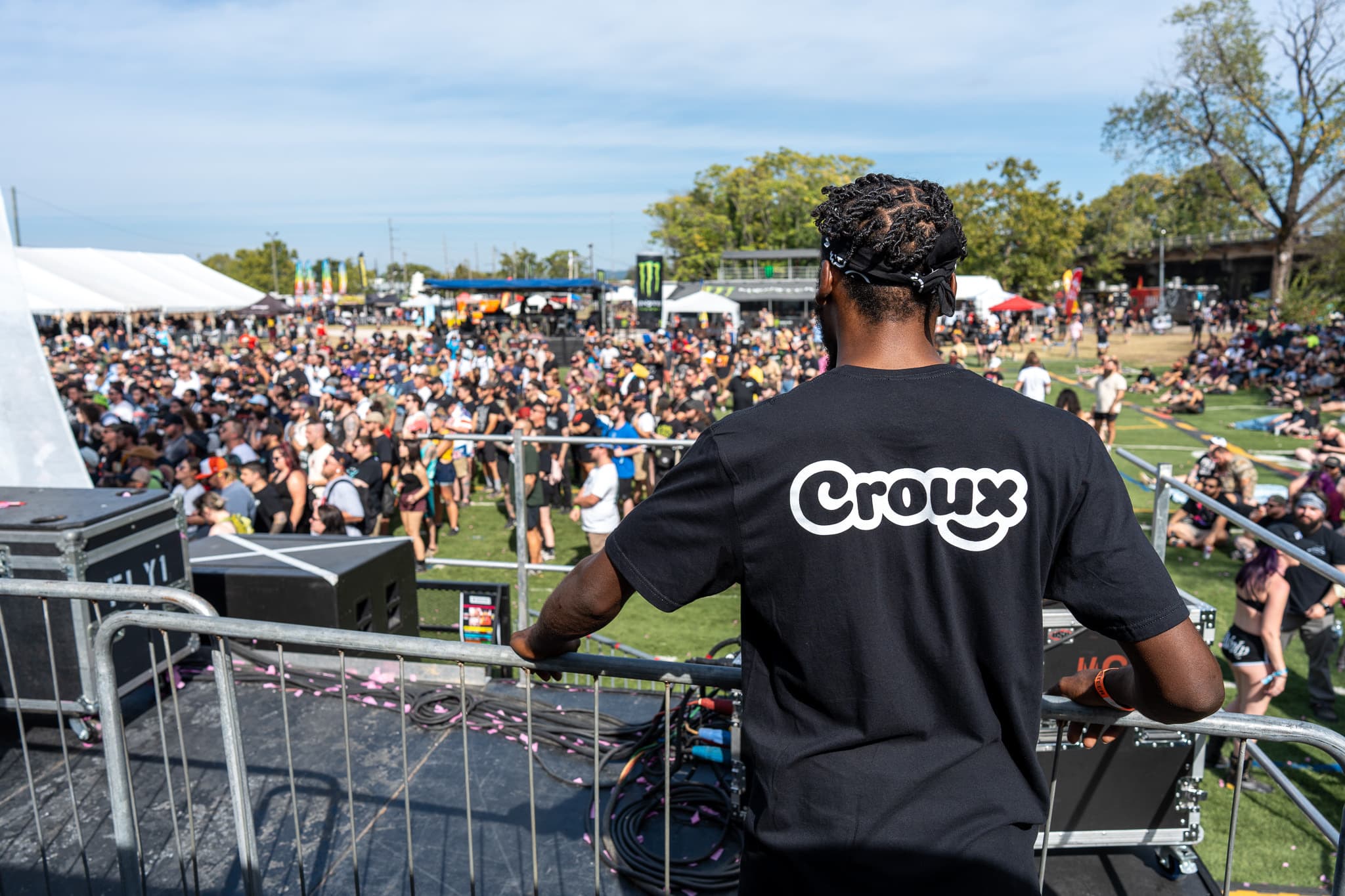
Hotels, banquet teams, caterers, and venues that flex labor around group bookings and event nights.
For operators who staff around an event calendar
Hotels and banquet teams
Convention hotels and resorts that flex banquet, bar, and housekeeping around a group calendar.
Catering and events
Off-premise and in-house caterers who staff to the BEO, not to a fixed weekly roster.
Stadiums and venues
Arena, expo, and mixed-use operators who need a returning crew on event night.

Staffing for the work you post
See how Croux staffs your kind of work: event staffing, catering, catering waitstaff, banquet staffing, hotel banquet staffing, hotels, convention staffing, housekeeping, stadium staffing, venue staffing, and golf and country clubs. Croux staffs hotels, caterers, and venues in Mobile, Montgomery, and Green Bay. For banquet labor market size, see the Banquet Labor Index.
Methodology and how to cite
This September 2026 edition is a single 12-month snapshot of Croux platform data for Alabama and Northeast Wisconsin, published once rather than updated live.
How to cite. Croux State of Hospitality Staffing Reliability (September 2026), https://croux.co/hospitality-staffing-reliability.
Sources used in this edition.
- Croux platform data for shifts starting September 27, 2025 through September 26, 2026, in Croux's Alabama markets and Northeast Wisconsin markets. Excludes Croux's own internal account and onboarding or virtual shifts. A rate is published only when its denominator is at least 30 events.
- Published Croux case studies linked on this page (hotel, club, catering, event, and venue accounts)
- Croux Banquet Labor Index (August 2026), https://croux.co/banquet-labor-index
- PR Newswire, 18 Jun 2026: 96% show-up, 4-hour average fill, 47,000+ workers, $5M+ paid to talent. That release uses a different window and grain than the market figures on this page.
Definitions used here. Fill rate is worked slots divided by requested slots on shifts the business did not cancel; a slot counts only when a worker clocked in, capped at the slots requested. Show-up rate is the share of workers still booked inside the final 24 hours (or who never cancelled) who clocked in; earlier cancellations are left out because those slots can be re-staffed. Repeat-worker share is the share of worked shifts by someone who had already worked an earlier shift for that same business. Time to first worker is the median from posting to the first confirmed worker for shifts posted less than 48 hours ahead; about a third of first confirmations are automatic. Case studies use their own windows and define fill as hired slots divided by requested slots.
Limits. Fill rate is reported for Alabama only. This edition has no national average, city rankings, weekly unfilled-cover series, or breakdown by vertical or month.
Questions about the study
What is the Croux staffing reliability study?
The first edition, published September 2026, reports measured fill, show-up, repeat-worker, and time-to-first-worker figures for Croux's Alabama and Northeast Wisconsin markets, with the definition behind each one. It also links published results from named hotel, catering, event, and venue accounts.
How should I cite this study?
Cite it as: Croux State of Hospitality Staffing Reliability (September 2026), https://croux.co/hospitality-staffing-reliability.
What is Croux's fill rate and show-up rate?
Croux reports these by region. In Alabama, over the 12 months to September 2026, 85% of requested worker slots on shifts the business did not cancel were worked, and 91% of workers still booked inside the final 24 hours clocked in. In Northeast Wisconsin, 92% of those workers clocked in; no fill rate is published there. There is no marketplace-wide average. If a worker no-shows, you do not pay for that shift.
What does fill rate mean here?
Fill rate here is worked slots divided by requested slots on shifts the business did not cancel. A slot counts only when a worker clocked in. It answers: did the posted work get covered? Case studies use hired slots instead, which reads slightly higher. It is not the same as show-up rate.
What does show-up rate mean here?
Show-up rate is the share of workers still booked inside the final 24 hours, or who never cancelled, who clocked in. Earlier cancellations are left out because those slots can be re-staffed. Alabama: 91%. Northeast Wisconsin: 92%. A June 2026 company release published a 96% show-up rate on a different window and grain.
Which published accounts does the study include?
Hotel and club: Renaissance Montgomery, PCH Hotels, The Club, Greystone, Hyatt Regency Green Bay. Catering, event, and venue: SFM Catering, The Fennec, Elevation / Ithaka, PMI Entertainment Group, Bruno Hospitality. Full results are on our case studies page.
Where can Croux fill shifts today?
Croux works with talent in Mobile, Montgomery, Green Bay, Birmingham, Tuscaloosa, and Auburn. Planning work in another city? Talk to our team.
How do I talk to Croux about coverage?
Request a conversation. Bring the date, role, and headcount. We walk through fill and fees. There is no long-term contract required to start.
See these numbers on your next event
Bring one banquet, one hotel weekend, or one venue date. We walk through fill, no-shows, and fees.